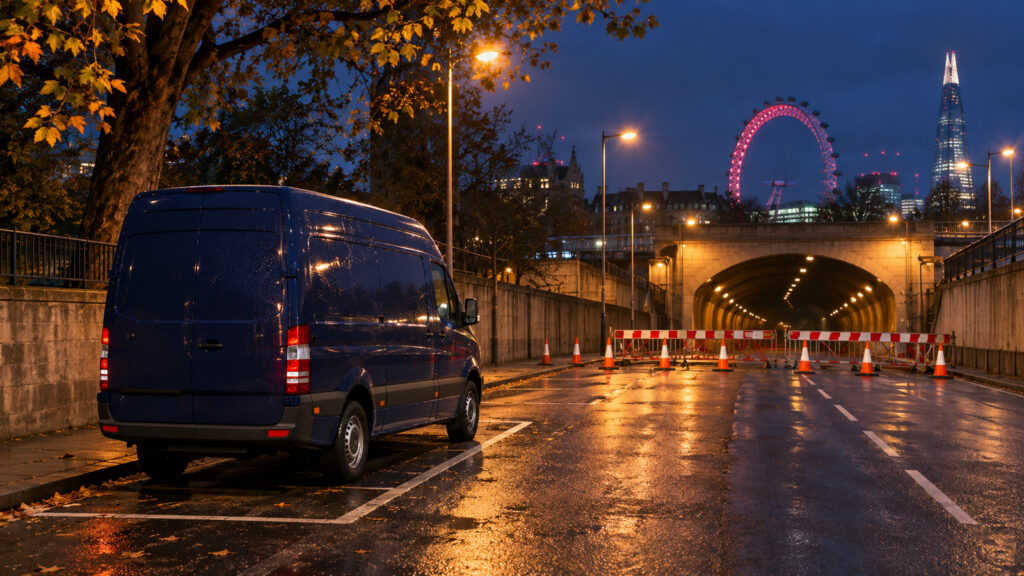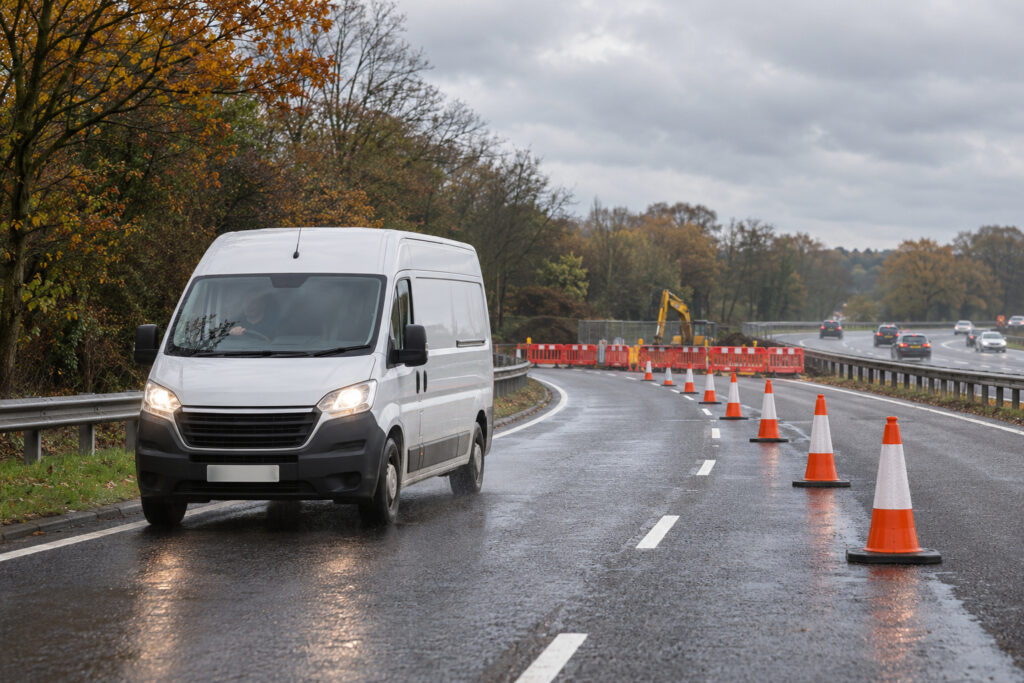
If your delivery into Chertsey uses the M25 clockwise exit at junction 11, check the route before fixing the receiving time. One lane of that exit slip is scheduled to remain closed from 4 November 2026 until late February 2027. The practical response is to review the approach with your carrier and agree an arrival window with the person taking the goods.
Lucky Van’s scheduled delivery service lets you discuss collection, access and handover together. This guide explains the confirmed restriction, the details to send before booking and how to keep a delivery workable if the journey takes longer than expected.
Information checked: 5 November 2026. This is a planning guide based on published works notices, rather than a live traffic report. Check the official updates again before dispatch.
Check which Junction 11 restriction affects you
Surrey County Council’s A320 scheme update identifies the affected approach as the clockwise exit slip at M25 junction 11, in the Gatwick to Heathrow direction. A lane closure provides working space for construction of a dedicated left-turn lane. The restriction concerns the exit approach; it should not be described as a months-long closure of the whole M25.
| Period | Published restriction | Delivery planning point |
|---|---|---|
| 4 November 2026 to late February 2027 | One lane closed on the J11 clockwise exit slip | Review the approach and receiving window before dispatch |
| 3 November, 22:00, to 4 November, 05:00 | Full clockwise exit-slip closure to install the lane closure | This installation window has already passed |
| Anticlockwise exit-slip works | Planned, with dates awaiting confirmation in the checked council update | Recheck for a separate announcement before later bookings |
The National Highways South East maintenance page also lists the clockwise exit-slip lane closure from 4 November through February 2027. It identifies Surrey County Council as the organisation delivering these junction improvements.
The published timetable does not establish a fixed delay for every delivery. Avoid adding an arbitrary number of minutes to every journey: the carrier needs to assess the actual date, direction and destination.
Give your carrier the complete destination details
A postcode is the starting point. For a useful transport plan, send the full address and identify the entrance where goods will actually be received. A shop’s customer door, an office reception and a warehouse loading point can involve different approaches and different people.
- Collection: address, earliest ready time and the contact releasing the goods.
- Destination: postcode, building or unit number and the correct vehicle entrance.
- Load: item count, dimensions, weight and any handling requirements.
- Access: gates, height restrictions, loading arrangements and any booking reference.
- Receiving: a named contact, telephone number and the latest acceptable arrival time.
Make clear whether that final time means arrival at the gate or completion of unloading. If staff leave at a set time, arriving just before they leave may still be too late for the handover. The carrier can assess the journey; the recipient needs to confirm what the site can accommodate.
Agree a receiving window before booking collection
Work backwards from the destination’s genuine deadline. Ask when someone will be available, how long they expect the handover to take and whether the slot can move if traffic changes. Share those answers before agreeing collection.
For a business delivery, a useful sequence is:
- Confirm that the goods will be packed and released at the stated collection time.
- Ask the carrier to review the route for the actual vehicle and date.
- Agree a receiving window with the destination contact.
- Define who must be contacted if the expected arrival moves outside that window.
- Confirm the arrangement in writing so both ends have the same details.
For a home delivery, use the same approach with whoever will open the property and help receive the items. Someone taking time away from work needs a realistic arrangement, especially when access or carrying assistance also has to be coordinated.
Review the last miles beyond the motorway
Reaching the junction does not complete the delivery. Ask the recipient about the approach to the correct entrance, including any local works or access instructions they have received. Send that information to the carrier alongside the address.
For deliveries continuing onto the A320 or nearby roads, consult the council’s current scheme page as well as the J11 notice. Different phases have different traffic arrangements. A diversion published for a particular closed road should not automatically become the route for every Chertsey delivery.
The council’s diversion for the overnight installation closure on 3–4 November related to that specific event. Do not reuse it as a standing instruction for the subsequent lane closure. Let the carrier check the current official information and vehicle suitability, and follow the restrictions and signs in place on the day.
A local shortcut suggested by a map or recipient still needs checking. A route suitable for a car may be unsuitable for the booked van, its load or the destination’s loading access.
Set a clear plan for arrival changes
Decide how updates will be handled before the van sets off. Keep one contact at each end responsible for confirming changes. This reduces the chance of the sender, driver and recipient acting on different versions of the plan.
If the expected arrival changes, first establish whether the recipient can still accept the goods. Then discuss the available options with the carrier before changing the destination, requesting another stop or rearranging the handover. Any revised service, waiting or additional journey needs agreement; a roadworks notice alone does not determine those arrangements.
You can adapt this message for the receiving team:
Our delivery to [address and entrance] is planned for [date and receiving window]. The carrier is checking the M25 J11 clockwise exit-slip works when planning the approach. Please confirm your latest acceptable arrival time, unloading arrangements and the contact to call if the expected arrival changes. We will agree any revised handover with you before changing the plan.
Only include an arrival estimate after it has been confirmed. A useful update tells the recipient what action is needed, rather than promising that traffic will clear by a particular time.
Recheck each booking while works continue
A delivery completed successfully this week does not establish the conditions for the next one. Keep the address and load details in your booking brief, but check the latest works information again for each journey. This matters particularly for recurring collections and deliveries booked several weeks ahead.
Use Surrey County Council for scheme announcements and National Highways for motorway works and travel information. The National Highways daily closure report is another check before travel. If sources show changed arrangements, ask the carrier to resolve the route before confirming a revised receiving time.
Treat late February 2027 as the published planned endpoint for this lane closure. Confirm the latest position before a booking near that date, and watch for the separate announcement covering the anticlockwise exit slip.
Send one complete brief for your delivery
Before requesting a quote, bring together the two addresses, date, ready time, receiving window, load details and access instructions. Add the recipient’s contact and highlight any deadline that cannot move. That gives the team the information needed to discuss the transport arrangement.
For a delivery involving the M25 J11 approach, request a Lucky Van quote and mention the Chertsey destination and receiving constraints. Confirm the route and handover together, then keep the official works updates available for the final check before dispatch.