Start with the organiser’s current access instructions
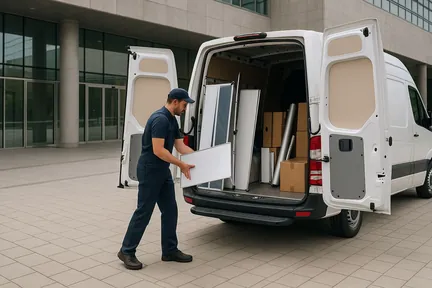
Use the event’s delivery information rather than the venue’s general visitor directions. Build-up access may use a service gate, holding area or loading bay that is separate from the public entrance. Give the booking team the relevant instructions and identify who can confirm them if the organiser issues an update.
Include any booked slot, vehicle access reference or sign-in requirement. Explain whether you have already arranged it or whether it still needs confirmation. A preferred delivery time is not the same as permission to enter the venue, so bring those two parts of the plan together before setting expectations for arrival.
Identify the stand and the person receiving the goods
Provide the event name, venue, hall and stand reference where applicable. Give a receiver who can recognise the consignment and help resolve access questions. A venue address alone does not tell the transport team which exhibitor is expecting the equipment or where the handover should take place.
Tell the receiver what packages are travelling and how many belong to the set. If your main event contact will be occupied elsewhere, nominate another available person. Agree whether the handover is at a loading area or another permitted point, rather than assuming the booking includes moving goods through the full venue.
Build an inventory of the packed event load
List flight cases, display components, cartons, furniture and other goods as they will travel. Give packed dimensions and weights for larger pieces and identify anything that must remain upright. If a stand is dismantled into long components, include their actual lengths and how they will be grouped or protected.
Photos can explain an irregular display piece or bulky case, but measurements remain important. Mark fragile fittings, delicate finishes and items that cannot be stacked. An event load may look compact when assembled on a stand while needing more room once it is packed into protective cases for the road journey.
Choose the vehicle around the equipment and access
Compare the delivery van fleet with the complete consignment in mind. A Medium Wheelbase van may be relevant for a modest case-and-carton load, while larger equipment may point towards a Luton box van. Suitability depends on dimensions, weight and the handling arrangements.
If you are asking about a curtain-sided Luton, explain the loading method and confirm the vehicle’s actual access with the team. Body style alone should not determine the plan. Every vehicle discussed is for transport with a driver carrying out the agreed journey and handover.
Plan loading before the build-up window
Have the equipment packed, labelled and available at the collection point before the agreed window. Nominate someone who can check the inventory and authorise release. If goods are being assembled or tested shortly before departure, make their realistic ready time clear instead of presenting an unfinished load as available.
Prepare the collection information together:
- The final case, carton and component count.
- Packed measurements and total weight.
- Any long, fragile or orientation-sensitive pieces.
- Loading assistance or equipment available at collection.
- The person who can confirm that the complete event set is ready.
Check the venue’s unloading facilities
Ask about the loading area, the ground conditions and any handling equipment the venue permits or provides. Equipment available somewhere in a large venue may not be available for your specific slot. Confirm the arrangement with the organiser and pass on the practical details.
If a tail lift is relevant, provide the load footprint and weight and describe the unloading position. Moving a compatible load from a van to the ground is different from taking it across uneven ground or through a hall. Explain the complete movement you need and agree the assistance rather than assuming a particular vehicle covers every part of the task.
Label packages so the stand team can check them
Use labels that connect each case or carton to the event, exhibitor and stand reference. Number the packages against the total where useful, and identify components that belong together. Keep the manifest available to the collection and receiving contacts so both ends can check the same set.
Put assembly fittings and accessories in clearly identified packages. A missing connection or unlabelled part can create difficulties during build-up even when the main equipment arrives. Transport can be assessed more clearly when the goods are described as a complete prepared consignment rather than several last-minute additions with separate instructions.
Coordinate return transport as its own movement
The end of an event does not necessarily mean the equipment is ready for collection immediately. Find out when dismantling can start, when the goods will be repacked and who will remain to release them. Give the actual ready time and the collection entrance used during breakdown.
State the return destination and inventory, including packaging or cases that were not part of the outward load. If some materials will remain at the venue or go to another event, identify them separately. A return journey needs agreement in the booking scope; its timing and vehicle requirements should not be left implicit in an outward-delivery request.
Explain journeys involving several suppliers or venues
A route may collect equipment from storage, printed materials from a supplier and furniture from another address. List all stops and describe the goods at each one. Explain which collections depend on a release appointment and which items must remain accessible when the van reaches the venue.
For this type of itinerary, our multi-drop delivery page explains the maximum-load and stop-order checks. Where everything is travelling on one planned date, scheduled delivery helps frame the time windows. The team still needs the venue-specific instructions alongside the wider route.
Keep changes in one clear instruction
Organisers can revise access slots or receiving locations close to an event. Choose a contact responsible for passing updates to the booking team and the person releasing the equipment. An instruction sent only to a colleague on the stand may leave the transport plan based on an older version.
When something changes, give the new time or entrance and say whether the goods or return movement have also changed. If an item becomes urgent, explain the required arrival time and discuss urgent cargo delivery. Availability and the revised venue arrangements need checking before a different plan can be relied upon.
Review the quote against the event logistics
Vehicle size, route, loading work, waiting and site restrictions can all affect the estimate. Be clear about appointment systems and any time spent obtaining access or waiting for equipment to be released. Ask the team to clarify the agreed work where the venue’s process is unfamiliar.
Before confirming the booking, review:
- Event, hall, stand and service-entrance information.
- Outward and return inventories and ready times.
- Access permissions, booked slots and receiving contacts.
- Loading equipment and assistance agreed at each end.
- Extra collections, storage stops or onward destinations.
Arrange event transport with a complete venue brief
Use the quote form for your route and equipment, then contact Lucky Van to explain access windows or a more involved itinerary. The delivery journal provides practical preparation guidance, and our coverage page offers a starting point for discussing journeys between London and other UK venues.
A useful event-delivery plan links a prepared load to an authorised entrance, a receiving person and a realistic timetable. Bringing those details together helps the team assess suitable van transport with a driver for build-up, breakdown or the particular event movement you need.