The carpet shop has cut your order and the fitter is booked. Before you reserve a van, ask the shop to measure the roll from end to end, including its wrapping and any projecting tube. That is the length the carrier needs. The area on your invoice tells you how much carpet you bought. The roll length tells the driver what needs to go through the doors.
Once you know the packed length, check the van’s door opening and usable space, then walk the route from the kerb to the room. Lucky Van can assess the collection and the help needed at each address once you have those details.
Get the finished roll length
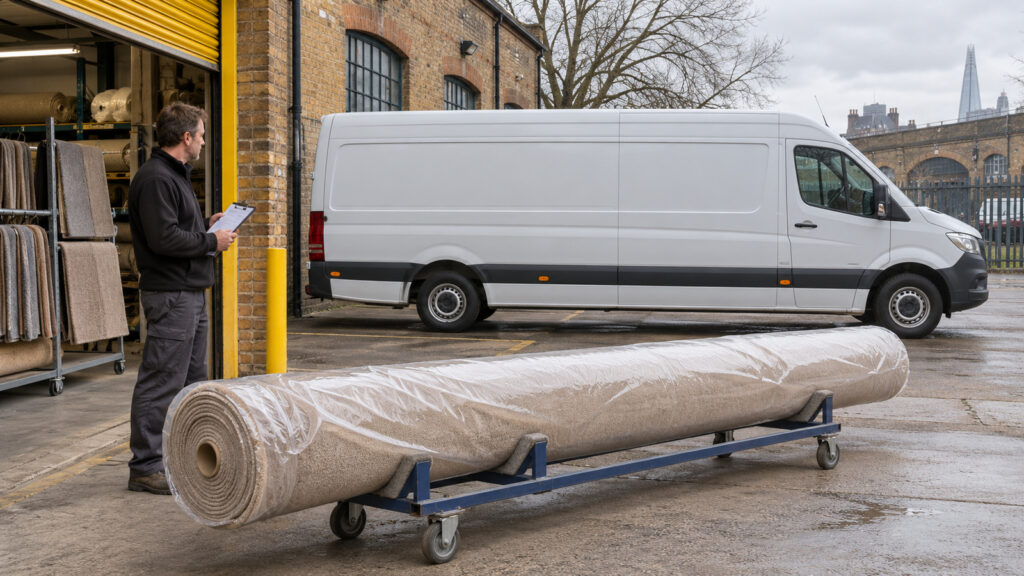
Carpet comes off a roll of a set width. For example, this Cormar technical sheet lists a range in 4 and 5 metre widths. Say you order a 3 metre cut from a 4 metre width. If the shop winds the cut back onto a tube that runs across the original width, the roll will be about 4 metres from end to end before wrapping. Ask the shop to measure it once it’s wrapped.
Ask for the packed length, the widest diameter and the weight. If there are two rolls, get those details for each one. List gripper rods, door bars and underlay separately if they are coming on the same trip. The longest package determines the length you need, but a second roll or a bundle of accessories can affect the usable space and how the load is handled.
Compare length with the actual van
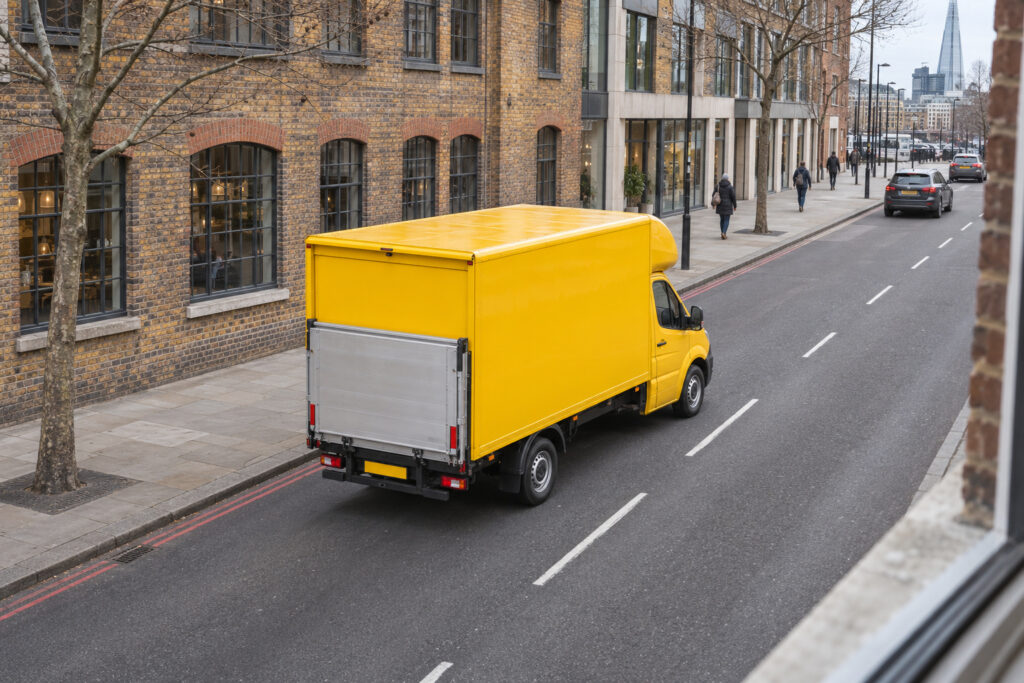
Use published load lengths to narrow down the choices. The Lucky Van fleet guide lists 4.0 metres of internal length for a Long Wheelbase van and 4.2 metres for an Extra Long Wheelbase van. A roll measuring 4.05 metres with its wrapping exceeds the first published length. The second is worth asking about if the carrier can confirm the clear space, the door opening and where the roll can be secured.
A wrapped 5 metre roll exceeds both published lengths when carried straight. Ask the carrier to assess that length before you book. It is also worth asking the retailer if it can deliver the roll. If the carrier considers loading it at an angle, they’ll need to check that it can pass through the opening, clear any obstructions inside and be secured with the doors shut. For other items on the same job, use the van capacity guide to check size and weight together.
Check both ends of the route
Start where the shop will hand the roll over. The collection point might be a warehouse door behind the showroom. Check the entrance, the space behind the parked van and whether shop staff will be available to help at the agreed time. Send a photo if there is a narrow yard or little room to line up the roll with the vehicle.
At the delivery address, look beyond the front door. Walk the route to the place where the carpet will be left. Check gates, corridors, the space on either side of a turn and overhead clearance on stairs. Measure any lift door and cabin you expect to use and check permission with the building manager. A roll that fits through a doorway may still need more space to swing around the next corner. Our guide to measuring awkward loads explains how to describe that turn to the carrier.
Agree how the roll will travel
Ask the supplier whether the carpet must stay on its core, whether it has a required orientation and what can be placed alongside it. Keep the wrapping intact until handover and let the carrier know if the end of the tube is exposed or the roll arrives damaged. Ask the supplier before changing the way it is packed. Some carpets can crease if bent sharply or folded. The supplier can tell you how to handle yours.
If the shop has cut carpet for two rooms, ask them to label both rolls. Give the driver the labels and tell the person receiving the delivery where each roll should go. If one room is upstairs and the other is at ground level, the carrier can allow for the different carrying routes when quoting.
Tell the carrier who can help load and unload, how far the roll needs to be carried and whether there are stairs. Confirm the number of people and any equipment needed for the route. The carrier chooses the method for securing the load in the van. The DVSA guidance for loading vans and light goods vehicles explains why goods must be secured against movement.
Leave time before the fitter arrives
Give the carrier the collection reference and the name of the person who can release the roll. Check when the shop will have it wrapped and ready to load. At the other end, agree who will receive it and where it can be left, following any storage instructions from the supplier or fitter. If the fitter wants to check the carpet before work starts, allow time for that when you arrange the delivery.
If a turn or lift looks too tight, discuss a different handover point while you still have time to make arrangements. For example, the fitter may be able to receive the roll in a suitable ground-floor space and arrange the rest of the move. Agree that with the fitter and the carrier before you book. A last-minute change can affect the carrying work and the quote.
Send the measurements with your quote request
Include the packed length, diameter and weight of every roll, the shop’s collection reference and both addresses. Add the collection and receiving windows, the agreed handover point and any stairs or tight bends. Send a photo of the packed roll and any turn where the available space is difficult to describe.
Share the details with Lucky Van’s Man & Van team so they can confirm which van and how much help you’ll need.